

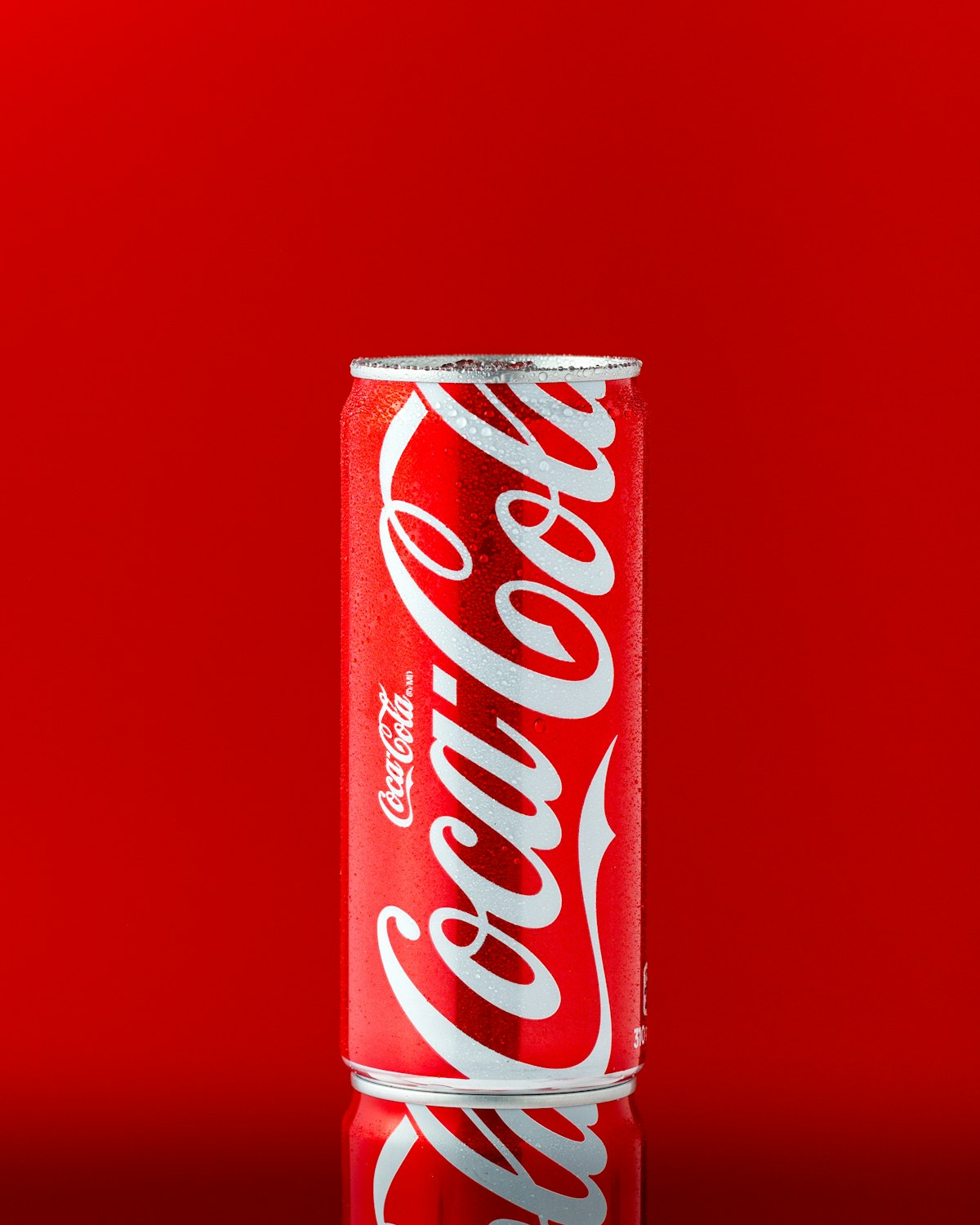
In 1953, the head of Coca-Cola sat down and wrote a letter to the President of the United States. He and Dwight D. Eisenhower were friends, but this was no courtesy note. Coca-Cola had a problem, and the proposed fix was as serious as it was absurd: couldn't the government simply mint a brand-new coin — a 7.5-cent piece?
Why would one of the world's most powerful brands rather ask for a new American coin than raise its price by two and a half cents? The answer is one of the strangest stories in economics.
The price that stood still through everything
When Coca-Cola launched at Jacob's Pharmacy in Atlanta in May 1886, a glass cost five cents. The striking thing isn't the price. It's that it didn't move for more than 70 years — until around 1959.
This isn't a throwaway anecdote. It's documented in a paper by the economists Daniel Levy and Andrew Young, published in the Journal of Money, Credit and Banking in 2004, titled "The Real Thing: Nominal Price Rigidity of the Nickel Coke, 1886–1959." They call it the most durable price rigidity they know of.
And consider what the price held steady through: two world wars, the Great Depression, sugar taxes, a levy that first treated Coca-Cola as medicine, and wartime sugar rationing. For comparison, the price of sugar tripled after the First World War, and coffee rose eightfold over six decades. Everything around the cola moved. The cola itself stayed at five cents.
Why it was actually impossible to change
The tempting answer is "because money was stable." But the truth is more interesting — it took a whole house of cards to keep one price fixed for so long.
The first reason was physical. Coca-Cola was sold largely through vending machines that took only nickels. The only alternative coin was the dime, and going from five cents to ten wasn't an increase — it was a doubling. There was no coin for anything in between, and no cheap way to retrofit hundreds of thousands of machines. Hence the desperate letter to Eisenhower.
The second reason was a contract. Early on, Coca-Cola signed a near-perpetual fixed-price deal with its bottlers, because otherwise the bottlers wouldn't dare build factories — they feared the company would later squeeze them on the price of syrup. The deal was written in an era of very low inflation, when no one imagined costs could take off. It eventually had to be renegotiated in 1921.
The third reason was the brand itself. "Five cents" was printed on signs, in advertisements, and in people's heads across America. The price wasn't just a price. It was part of the product.
What changed — and what you're really measuring
Then, around 1959, it all collapsed. The nickel Coke vanished. Today you pay many times more, and a five-cent cola exists nowhere on earth.
The interesting question isn't why the price finally rose. It's why it rose so much, so fast, afterwards. Five cents in 1886 was worth roughly a dollar in today's purchasing power. Over the decades that followed, money lost value at a pace earlier generations had never lived through. What changed wasn't the cola. It was the measuring stick.
Measure with something that can't be printed, and the story flips. satsatlas.com tracks everyday goods in satoshis — the smallest unit of bitcoin — across more than 100 countries, and the same pattern keeps showing up: priced in sats, goods like coffee have trended cheaper since 2017, the exact opposite of the feeling that everything keeps getting more expensive. (Those figures are a live series; true as of May 2026.)
The cola teaches us that a price is surprisingly hard to change — and that when it finally moves a lot, it's usually the money, not the product, that has shifted. So the question isn't "why has everything gotten more expensive?" The real question is: what are you measuring with?
Sources
- Daniel Levy & Andrew Young, "The Real Thing: Nominal Price Rigidity of the Nickel Coke, 1886–1959," Journal of Money, Credit and Banking, vol. 36, no. 4 (2004).
- Tim Harford, "The Mystery of the 5-Cent Coca-Cola," Slate (2007).
- satsatlas.com — global prices measured in satoshis.
Faktanote: That Coca-Cola held at five cents from 1886 to about 1959 is well documented. The Eisenhower letter and the vending-machine mechanics are retold from Tim Harford's account. The sats trend refers to satsatlas's own data and is a live series that changes over time.